Quicknode 2025 Year in Review: How Web3 Infrastructure Scaled
In 2025, Web3 moved from experimentation to production. See how Quicknode scaled to 5 trillion requests as builders shipped real systems at scale.

2025 marked a clear shift in how Web3 was built and operated.
Applications moved deeper into production, traffic scaled materially, and infrastructure expectations increased across the ecosystem. Builders focused less on experimentation and more on reliability, throughput, and actual performance in the real world.
This post looks back at what that shift looked like in practice, using Quicknode’s 2025 usage data to highlight how builders shipped, where activity concentrated, and how infrastructure scaled to support it.
Here’s what that looked like on Quicknode ⬇️
The Scale
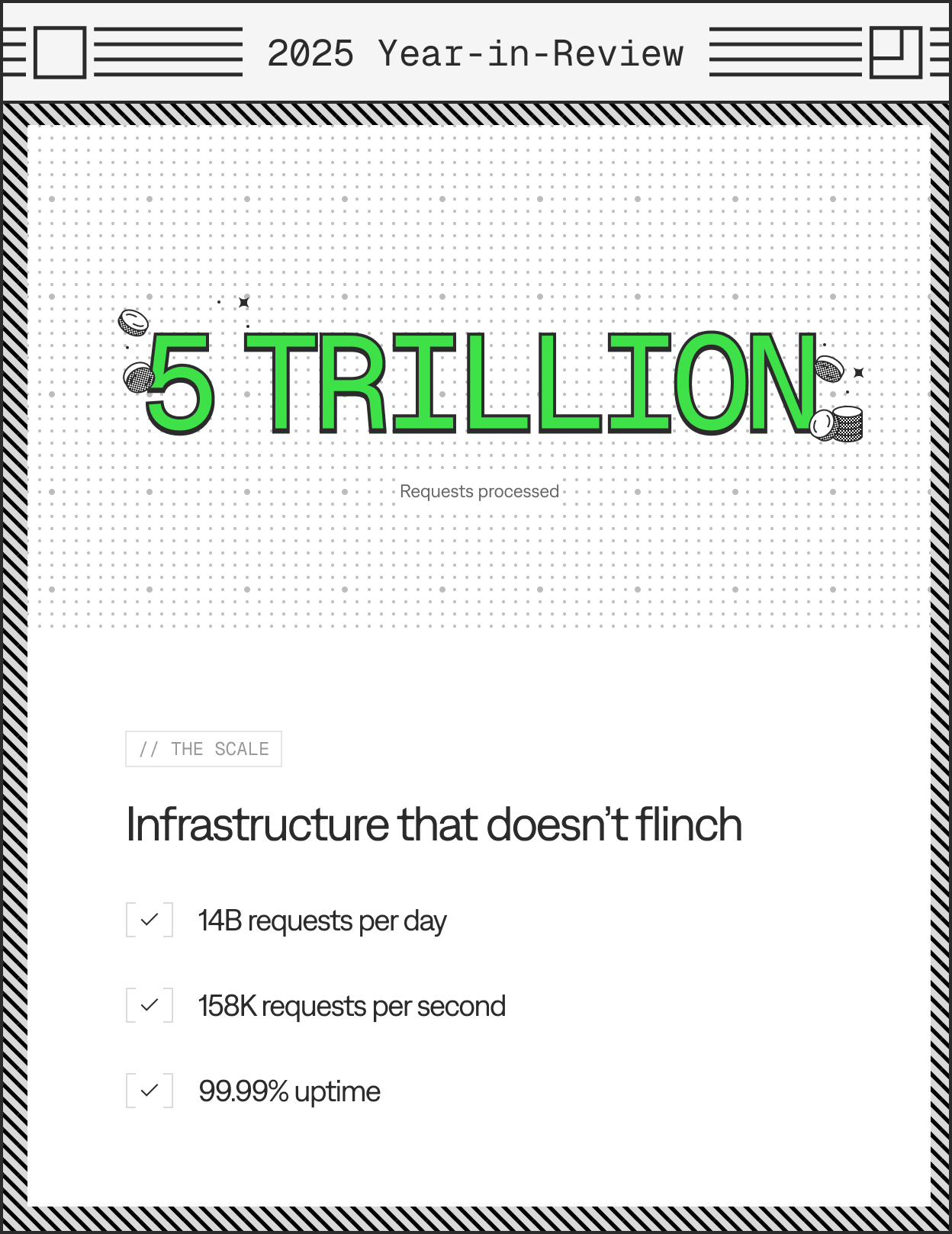
5 trillion requests processed in 2025.
That’s not a vanity number. It involves sustained production traffic across live applications, exchanges, analytics platforms, and protocols that run every day.
- ~14 billion requests per day
- 158,000 requests per second
- 99.99% uptime
Infrastructure doesn’t get credit when it works. It only gets noticed when it doesn’t. In 2025, the bar moved higher, and systems teams expected platforms not to flinch under load.
This mirrors a broader shift highlighted in a16z crypto’s State of Crypto 2025: as crypto infrastructure matured, reliability and throughput overtook experimentation as the primary requirement.
How Builders Actually Shipped in 2025
The story of 2025 wasn’t about new primitives. It was about execution.
Builders optimized for real users, real latency, and real-time data.
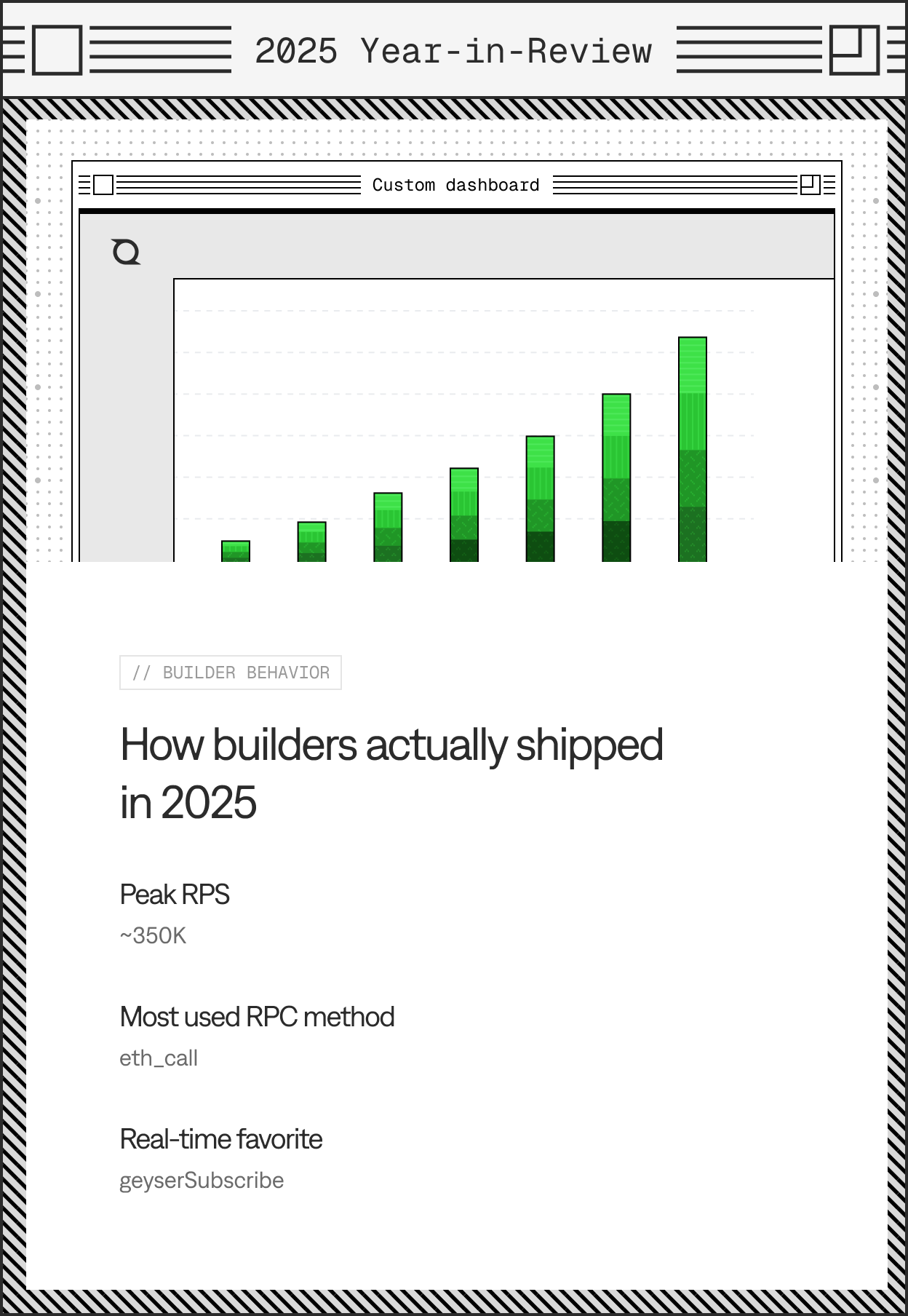
- Most used RPC method:
eth_call - Real-time favorite:
geyserSubscribe - Peak production behavior: sustained read-heavy workloads and live subscriptions
Reads dominated. Streaming mattered. Builders prioritized observability and responsiveness over speculative complexity.
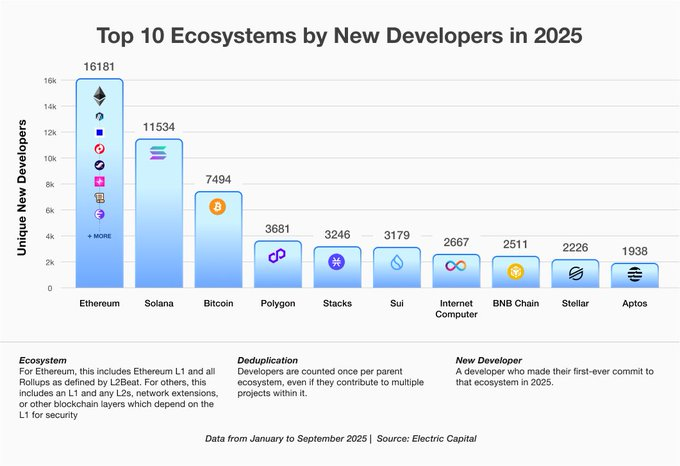
This aligns with Electric Capital’s 2025 developer data, which shows a continued shift toward application-layer maturity and production-first workflows.
Where The Blocks Got Built
Usage followed developers, not hype.
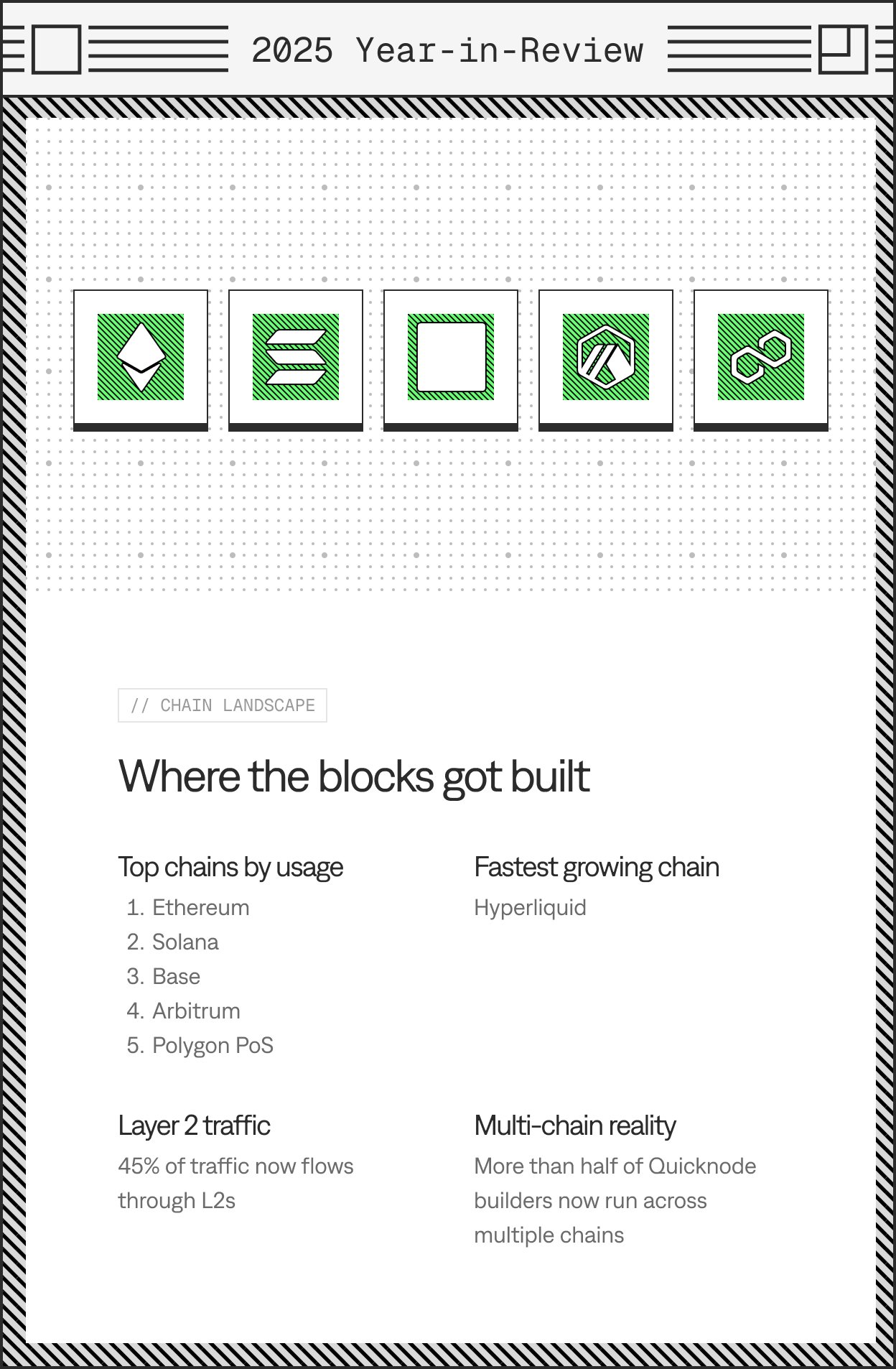
Top chains by usage:
- Ethereum
- Solana
- Base
- Arbitrum
- Polygon PoS
Fastest-growing chain by usage: Hyperliquid
Layer 2 traffic: ~40–45% of total requests
The takeaway is not that one chain “won.” It’s that multi-chain became the default operating model.
Electric Capital’s 2025 report shows that roughly one in three blockchain developers now works across multiple chains. Production infrastructure had to support that reality without fragmentation or operational overhead.
From Raw Data To Production
As applications scaled, so did their data requirements.
Builders moved away from bespoke pipelines and toward managed streaming, transformation, and delivery.
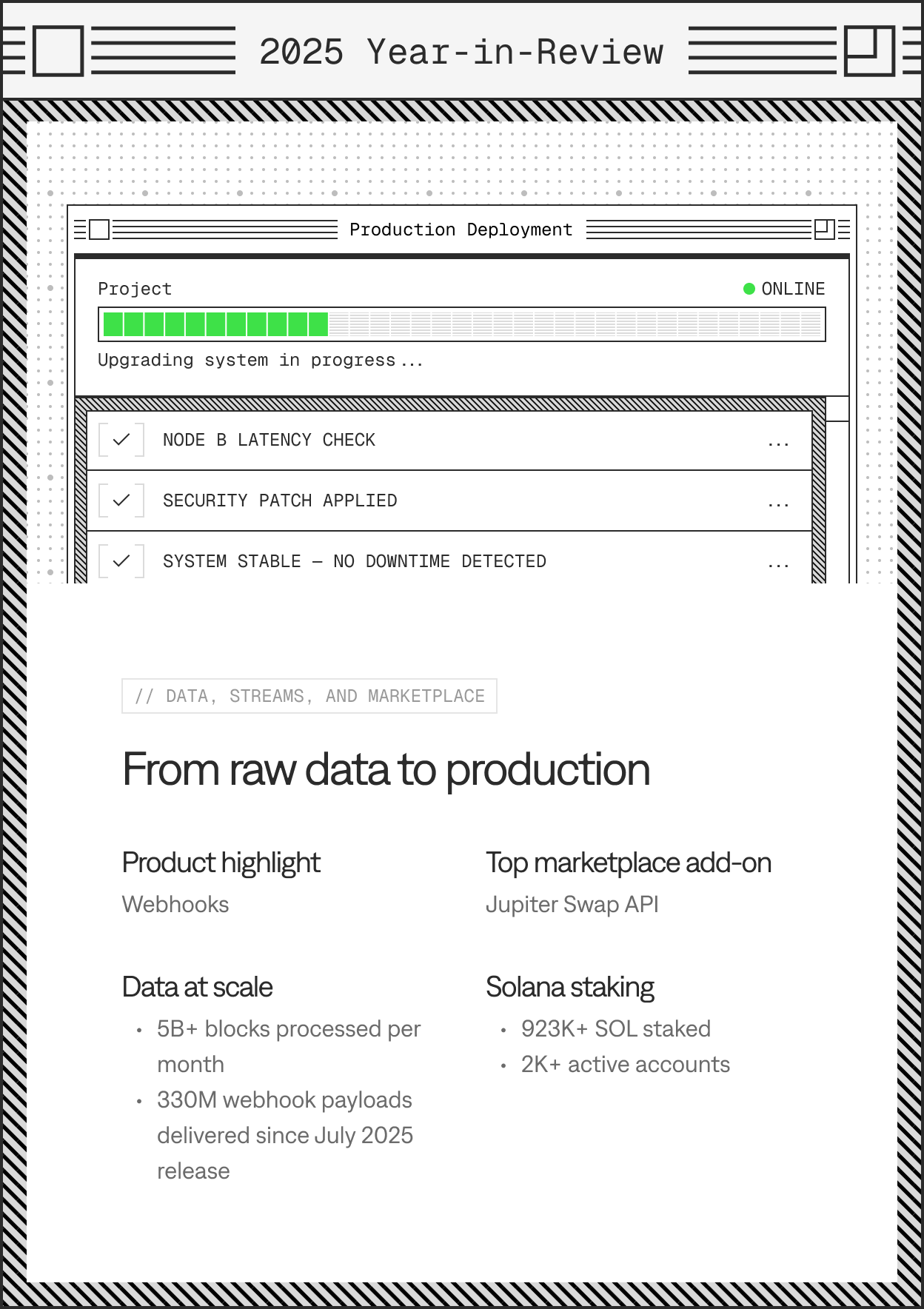
- Product highlight: Webhooks
- Top Marketplace add-on: Jupiter Swap API
- Streams & Webhooks:
- 5B+ blocks processed per month
- 330M webhook payloads delivered since July 2025
On Solana specifically:
- 923K+ SOL staked
- 2K+ active staking accounts
The pattern was clear: fewer custom systems, more production-grade primitives that teams could trust.
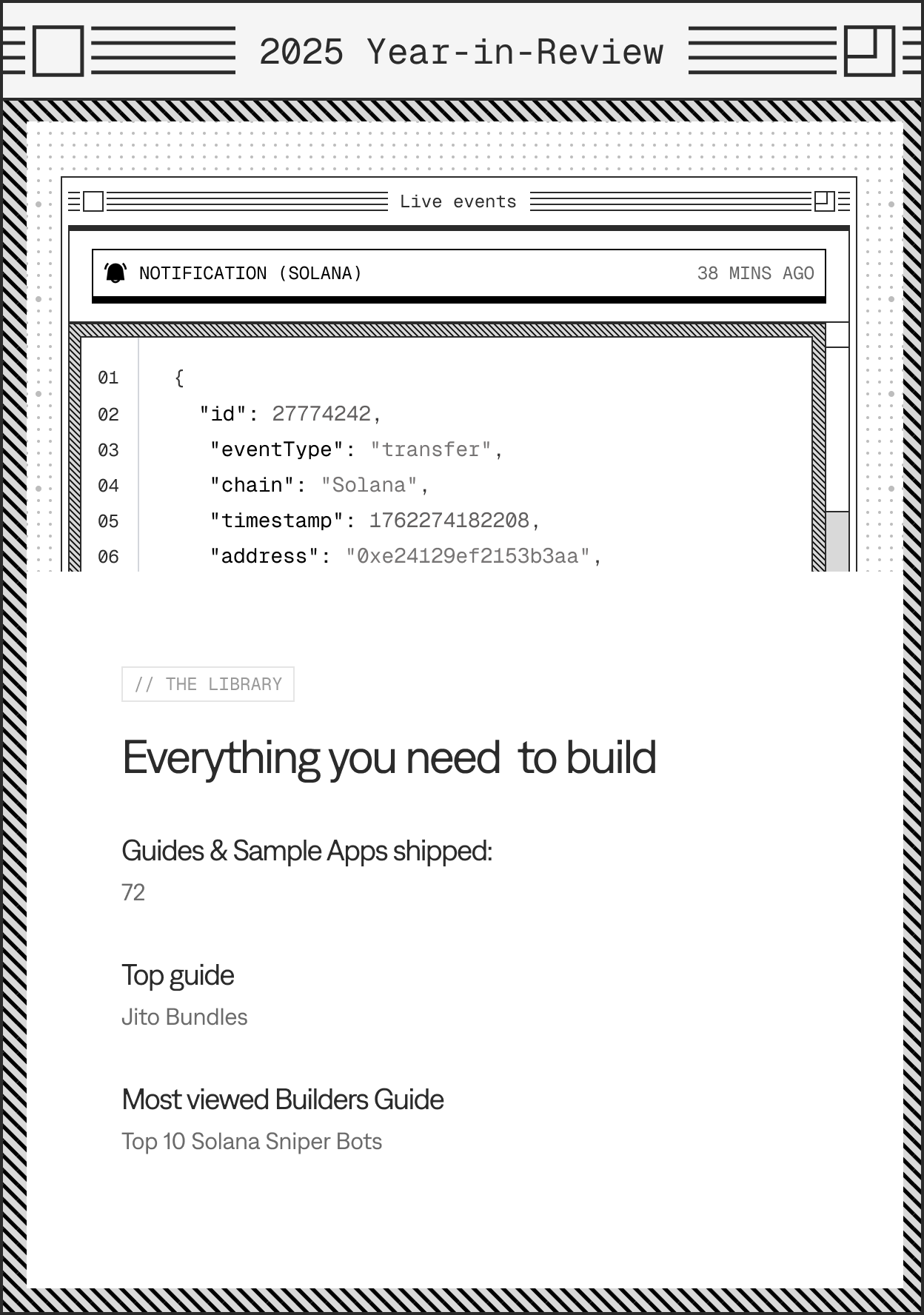
The Library
Documentation stopped being a nice-to-have in 2025. It became infrastructure.
- Guides and sample apps shipped: 72
- Top guide: Jito Bundles
- Most viewed Builders Guide: Top 10 Solana Sniper Bots
As teams moved from learning to operating, they needed clarity, examples, and reference architectures they could apply directly. Good docs reduced time-to-production. Bad docs became blockers.
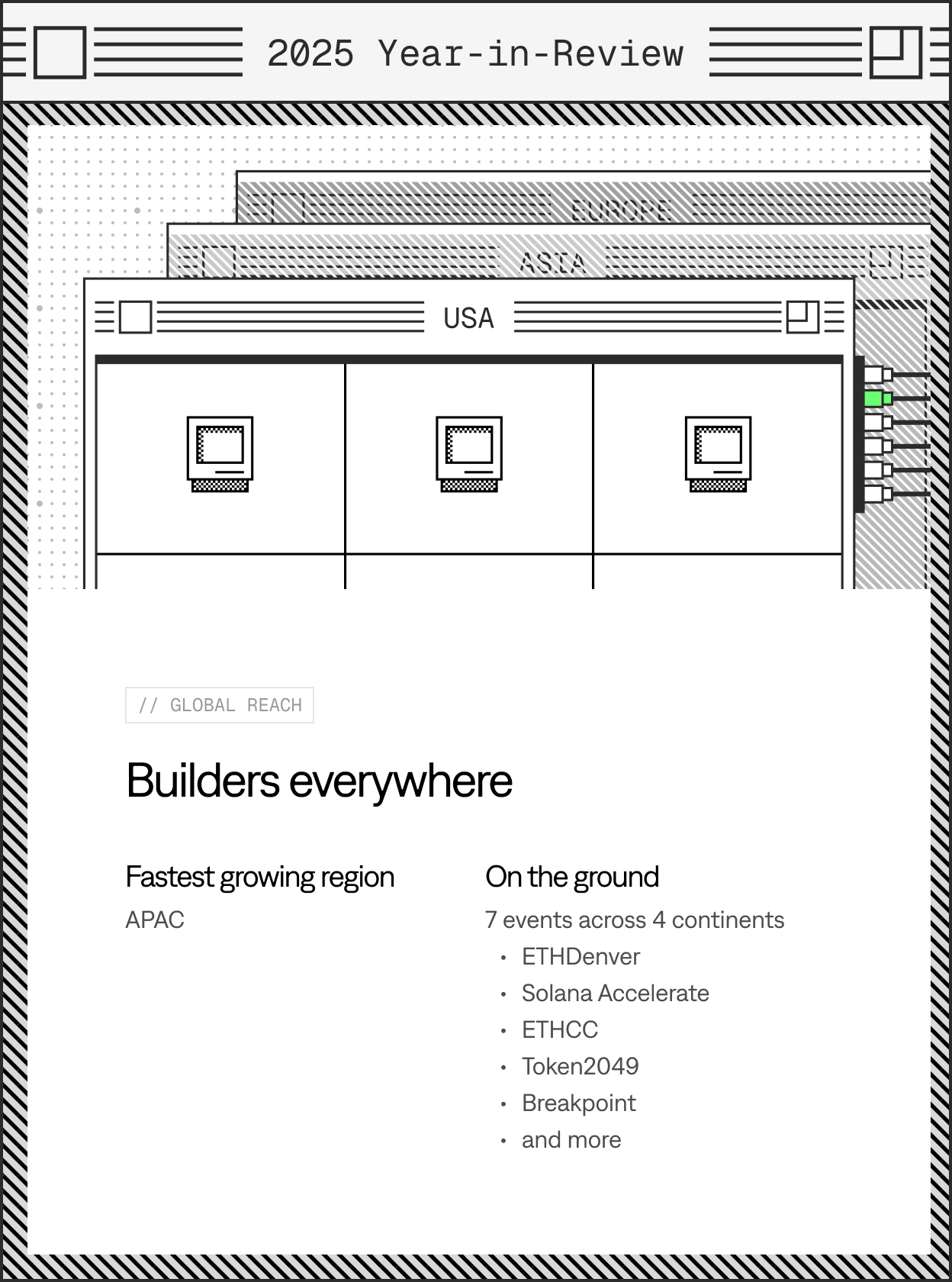
Builders Everywhere
Growth wasn’t evenly distributed, but it was global.
- Fastest-growing region: APAC
- On-the-ground presence: 7 events across 4 continents — ETHDenver, Solana Accelerate, ETHCC, Token2049, Breakpoint, and more...
This tracks closely with broader ecosystem data from a16z’s State of Crypto 2025. While Ethereum retained the largest active developer base globally, regions like APAC continued to see outsized growth in both new builders and production usage.
Looking Back, Looking Forward
In 2024, Quicknode crossed 3 trillion requests.
In 2025, that number grew to 5 trillion.
That growth didn’t come from hype cycles. It came from teams shipping real products, scaling real systems, and expecting infrastructure to keep up.
As the crypto industry continues to mature, the work increasingly looks less like experimentation and more like engineering.
That’s where infrastructure earns its place.
Here’s to the builders who shipped in 2025, and to the systems that held while they did.
About Quicknode
Founded in 2017, Quicknode provides world-class blockchain infrastructure to developers and enterprises. With 99.99% uptime, support for 80+ blockchains, and performance trusted by industry leaders, we empower builders to deploy and scale next-generation applications across Web3.
Start building today at Quicknode.com